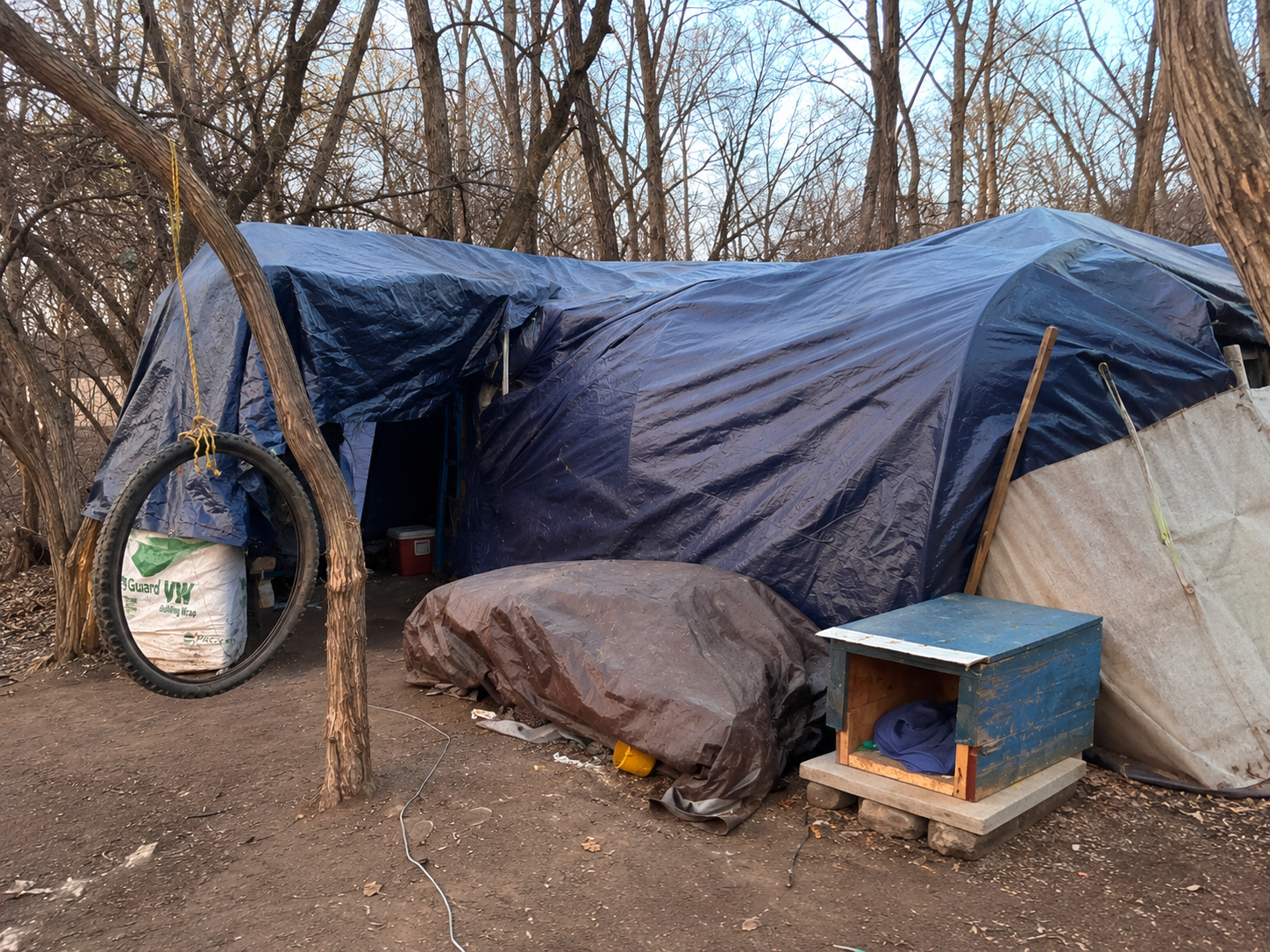

COLUMBUS, Ohio — As Columbus officials move toward clearing a South Side encampment near South High Street, questions remain about where approximately 60 residents will go and whether the city has enough shelter and housing options to prevent people from being displaced onto the streets.
The debate at Columbus City Council has increasingly centered on what city officials can provide before the planned clearing takes place, including temporary shelter, warming accommodations, and longer-term housing options for people living at the encampment.
During the latest council discussion, members raised concerns about the limited availability of temporary accommodations and the lack of a clearly defined permanent housing strategy. Officials were pressed to consider alternatives beyond moving residents from one location to another, including permanent supportive housing.
No final resolution emerged from the discussion, leaving residents facing uncertainty as the city prepares for the next steps.
A Dec. 1 deadline and limited shelter options
The city has reportedly given residents until Dec. 1 to leave property near 3075 and 3177 South High Street. The encampment occupies roughly 25 acres across multiple parcels along the Scioto River, and plans to sell land for a proposed entertainment development have helped drive the timeline for clearing the site.
While city estimates reportedly put the number of residents closer to 40, advocates and people living at the encampment estimate more than 60 people, underscoring the difficulty of determining how many individuals need housing and services.
The availability of shelter remains a central concern. Discussion surrounding the council meeting referenced approximately 20 non-congregate hotel beds and warming centers expected to open around the Dec. 1 deadline. Those options raise questions about whether the city can accommodate the entire population and how residents with specific needs will be served.
Residents, advocates and neighboring property owners raise concerns
The council discussion included testimony from people living in the encampment, advocates and neighboring property representatives.
Residents described repeated displacement and frustration with navigating the city's housing assistance system. Advocates warned that clearing the camp during cold weather without housing alternatives could expose people to serious risks.
At the same time, representatives of neighboring apartment properties and the American Legion described concerns involving fires, break-ins, damage, trash, and safety. Their testimony added another dimension to the debate, highlighting the challenges facing nearby residents and property owners while council considers how to address homelessness and public safety.
Council wants options, not simply a relocation plan
Council members pressed city officials for a more concrete response, including the possibility of permanent supportive housing. Council leadership asked for options and funding proposals to be brought back for further discussion.
The meeting did not produce a final agreement to stop the clearing or a comprehensive plan guaranteeing housing for everyone affected. The immediate challenge now is whether city officials can identify sufficient placements and services before the deadline.
That leaves several critical questions unanswered:
• How many residents have actually been offered shelter or housing?
• How many beds and placements are available, and are they confirmed?
• How long can people remain in hotel placements?
• What happens to residents who decline congregate shelters?
• How many people could still be left outdoors after the clearing?
• What accommodations are being made for people with disabilities, pets, medications, medical appointments, and personal belongings?
• Will the city consider delaying the clearing if adequate housing is not available?
With the deadline approaching, the debate is no longer simply about clearing an encampment. It is about whether Columbus can execute a plan that addresses neighborhood concerns without leaving dozens of people without a place to go during the winter.